What Makes a Community Endure
A community is more than a collection of people living side by side.
It is a shared rhythm of life — formed through belonging, responsibility, memory, and care.
Debre Zeit demonstrates these qualities not in abstraction, but in practice.
Here, friendship begins early and often lasts a lifetime.
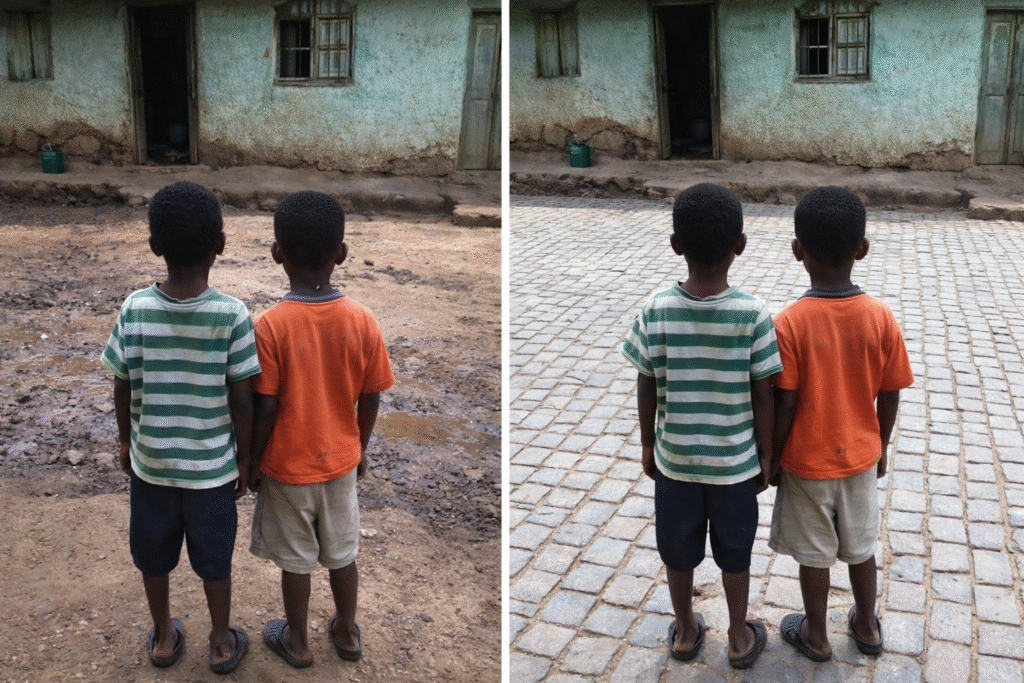
The photograph that introduces this section was taken in 2014, in front of Taddesse Haile’s childhood home.
The children stand on what was once a dirt and mud street — a place of play, arguments, laughter, and imagination. Today it is paved with cobblestone, but its meaning remains unchanged.
It was on this very street that a lifelong friendship began.
As a child, Taddesse noticed another boy returning with his mother from a visit. What stood out was not wealth or status, but cleanliness, discipline, and quiet respect. The next day, the two met again in Grade 4. From that moment on, a friendship took root — one that would last a lifetime.
This is how community works in Debre Zeit:
through proximity, observation, and continuity.
The Defining Elements of Community in Debre Zeit
Debre Zeit reflects the essential characteristics that define a true community — not as theory, but as lived experience.
-
People, Diverse and Bound Together
At its core, Debre Zeit is a coming together of diverse individuals who formed a cohesive and inclusive whole. Difference did not fragment the community; it strengthened it.
-
A Defined Place
Community takes shape in a recognizable locality. Debre Zeit is geographically anchored — from its center outward, bounded by surrounding lakes and neighboring towns. For those who grew up here, this place remains a focal point of identity.
-
A Strong Sense of Belonging
Debre Zeit is marked by deep community sentiment — a shared feeling of attachment and return. There is a saying that those who drink the salty waters of Lake Hora cannot stay away for long. Even when residents leave for study or work, they find each other again, wherever they go.
-
Natural Growth
The community was not planned by decree. It grew organically — shaped by institutions such as the Air Force, agricultural research centers, and schools, and strengthened by families who arrived, stayed, and contributed.
-
Permanence
Individuals may come and go, but the community itself endures. Debre Zeit remains stable in character even as its members move across generations and geographies.
-
Shared Culture and Practice
Language, customs, and traditions created familiarity and trust. Religious and cultural celebrations — Ethiopian New Year, Gena, Fasika, Muslim holidays, and Irreecha — were observed together, reinforcing unity.
-
Multiple Shared Purposes
Community life extended beyond one function. Social support systems like Idir, economic cooperation through Aqib, recreation, culture, and spiritual life all intertwined, strengthening bonds that lasted even beyond migration.
-
An Organized Social Life
Daily life revolved around school, work, religious institutions, trade, and service. Respect for law, teachers, elders, and collective responsibility guided behavior. Elders were entrusted with safeguarding not just order, but the growth of the young.
-
A Name That Holds Meaning
Though officially known at different times as Adda, Bishoftu, and Debre Zeit, those who grew up here between 1955 and 1990 continue to identify the community as Debre Zeit — a name tied to memory rather than administration.
-
A Community Without Decree
Debre Zeit was never defined by legal charter alone. Its character emerged from lived relationships, shared responsibility, and continuity — qualities untouched by changes in name or governance.
What Follows
The sections that follow explore the lived dimensions of this community in greater detail — family life, residence, education, migration, economic activity, disability, ethnicity, and religion — drawing where relevant on the 2007 Ethiopian Census and lived observation.
Together, they deepen the understanding of how Debre Zeit functioned not merely as a town, but as a sustaining social organism.
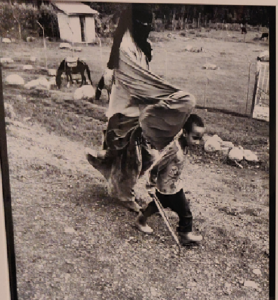
Here we see a strong bondage between Mother and son: and son Leading and Protecting